


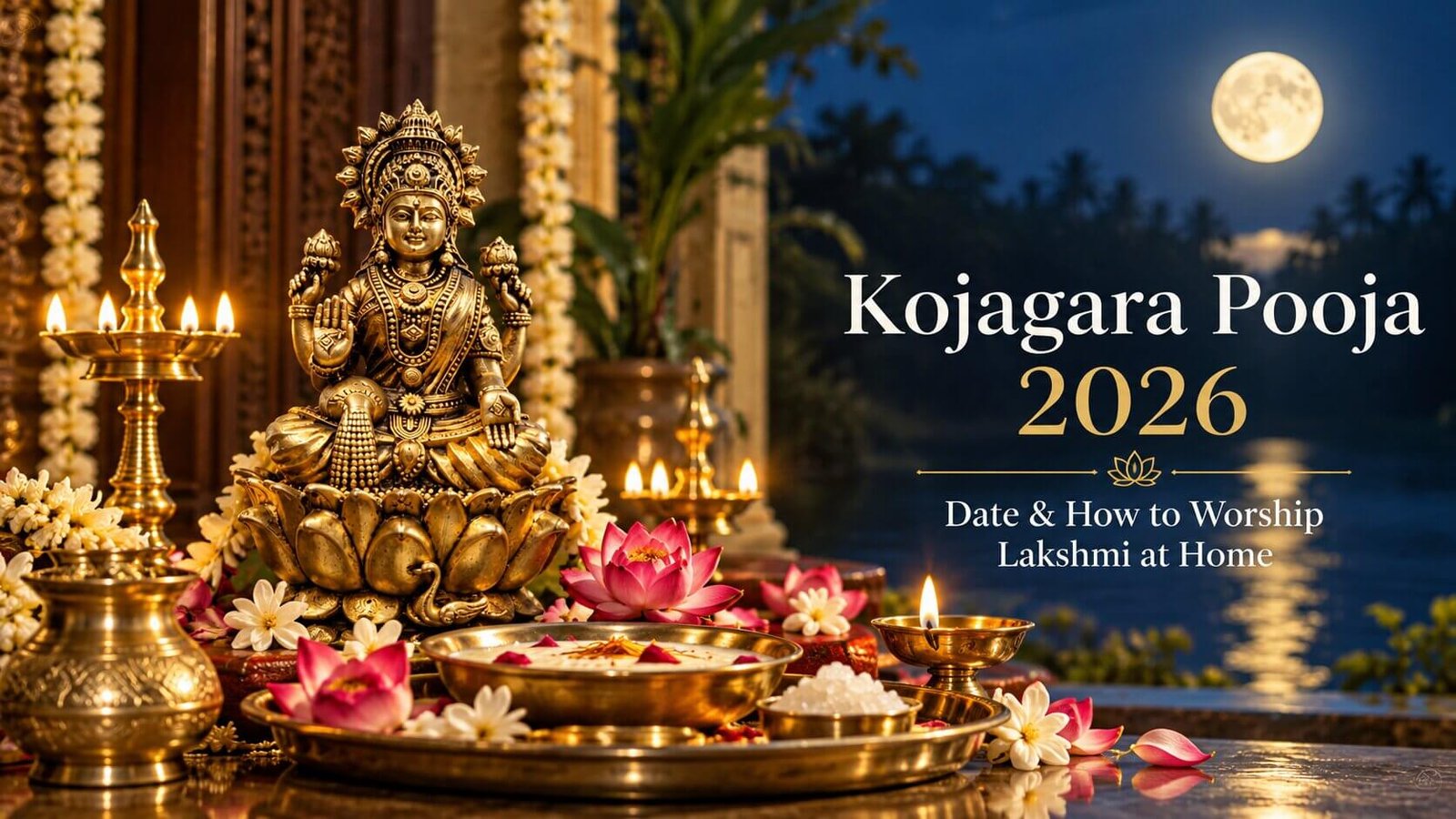
Kojagara Pooja : Quick Glance
Kojagara Pooja is observed on the Ashwin Purnima night with Lakshmi worship and jagaran, the devotional vigil. In widely used Panchang calculations, the 2026 Kojagara night is Sunday, 25 October, with Purnima continuing into the morning of 26 October. Some Bengali panjikas label the pooja date differently, so your local panjika, priest or family practice should take precedence.
Why the calendar may show 25 or 26 October
The full-moon tithi begins late in the morning of Sunday 25 October and ends on the morning of Monday 26 October. Drik Panchang’s Kolkata Kojagara page selects Sunday 25 October because its stated rule favours the night when Purnima is present at Nishita, the late-night worship period.
A separate page describing the Bisuddha Siddhanta Panjika prints Monday 26 October as Kojagari Lakshmi Puja, citing its printed panjika and a sunrise-based reckoning. That is not an official government festival listing, but it shows why a household may find a different date in its own almanac. Families should follow the date given by their priest, community pooja or trusted family panjika. If you observe the late-night vigil, check which civil night your tradition intends.
Nishita, Purnima and moonrise are not interchangeable
These three times answer three different questions:
- Purnima tithi is the lunar day itself. In the published Indian calculations it begins at about 11:55 AM IST on 25 October and ends at about 9:41 AM IST on 26 October.
- Moonrise is when the moon appears. In Kolkata it is listed at 4:21 PM on 25 October.
- Nishita is the late-night interval used to decide the festival date. It is not another name for moonrise.
Nishita is also local, not nationwide. Drik Panchang lists these examples for 25 October:
City | Nishita window |
|---|---|
Kolkata | 10:56 PM to 11:46 PM |
New Delhi | 11:40 PM to 12:31 AM (into 26 October) |
These are examples, not interchangeable muhurats. Select your own city and check the local Panchang before scheduling a time-specific ceremony.
Families outside India should be especially careful. For Lancaster, California, Drik Panchang lists the Kojagara night as Saturday 24 October, with Nishita from 12:11 AM to 1:03 AM on 25 October, a different civil date from India. Do not convert a Kolkata muhurat by adding a fixed number of hours, because the lunar-day rule may place the ritual night differently. Use a location-specific Panchang or ask your community temple, especially when planning a shared virtual pooja across countries.
What does Kojagara mean?
The name is traditionally linked to the call “Ko jagarti?”, meaning “Who is awake?” In the devotional telling, Lakshmi visits the world on the autumn full-moon night and notices those who remain wakeful in worship. The vigil is therefore not incidental: wakefulness, prayer and Lakshmi worship form the heart of the tradition in regions such as Bengal, Odisha and Assam.
This is a devotional narrative, not a literal prediction of financial reward. A vigil can include prayer, devotional songs, a reading of Lakshmir Panchali and family conversation. It need not become a contest in sleep deprivation. Households with children, elderly relatives or people who need rest can perform their worship at a manageable hour while keeping the spirit of attention and gratitude.
Kojagara, Sharad Purnima and Diwali Lakshmi Pooja
Kojagara and Sharad Purnima fall on the same night but with different emphasis. Sharad Purnima is the broader full-moon observance, with regional customs such as moon viewing and kheer. Kojagara places particular emphasis on Lakshmi worship and jagaran. In Maharashtra, Kojagiri celebrations are associated with milk preparations and gathering under the full moon, and elsewhere the night is connected with Krishna devotion. Treating every Sharad Purnima custom as a compulsory Kojagara ritual erases these regional differences.
Kojagara and Diwali Lakshmi Pooja are different observances. Both honour Lakshmi, but they belong to different lunar dates and regional calendars. Kojagara centres on the Ashwin full moon and the theme of wakefulness. Diwali Lakshmi Pooja centres on the Amavasya evening and is especially prominent in many north and west Indian traditions, where it may include Ganesha worship, household accounts and business customs. Some families observe both; others place stronger emphasis on one. Bengali households often give Kojagari Lakshmi Puja much greater weight than a generic Diwali Lakshmi ritual.
Naming the occasion correctly helps readers find the ritual and offerings that suit their own family. Do not transfer the Diwali samagri list wholesale to Kojagara.
Simple Lakshmi Pooja at home
- Clean the prayer area and place Lakshmi’s image or Lakshmi idol on a stable altar.
- Light one or more lamps safely and offer flowers, kumkum and a simple naivedyam.
- Recite a familiar Lakshmi prayer, the Sri Sukta or Lakshmi names according to your tradition.
- If you are observing jagaran, spend part of the evening in prayer, reading or quiet devotional activity.
- Complete with aarti and share prasadam.
Yes, a simple household prayer can be done at home without a priest. Formal procedures should follow your family tradition.
Planning the evening without rushing
In the afternoon, clean and dry the altar, prepare flowers and make the offerings your household prefers. Arrange the deity image before dusk. At moonrise, families who follow moon-viewing customs can pause for darshan. Lakshmi worship is commonly performed in the evening or in the relevant Nishita window, depending on local tradition. If you observe jagaran, plan a realistic period of prayer, recitation or devotional reading rather than treating wakefulness as an endurance test. Conclude according to family practice and distribute prasadam hygienically.
The Bengali home tradition: alpana, Lakshmi sara and Panchali
In many Bengali households, Kojagari Lakshmi Puja follows Durga Puja and is a major annual occasion for worshipping Lakshmi. Families may decorate the floor with white alpana drawn in rice paste, sometimes with small footprints leading towards the altar. The focal point may be a painted Lakshmi sara, a framed print, a clay image or an established household murti. Lakshmir Panchali, a Bengali devotional narrative, may be read or heard.
These are important cultural details, not requirements for every Indian household. Odisha, Assam and Maharashtra have related but distinct ways of marking the full moon.
Kojagara pooja samagri: essentials and regional extras
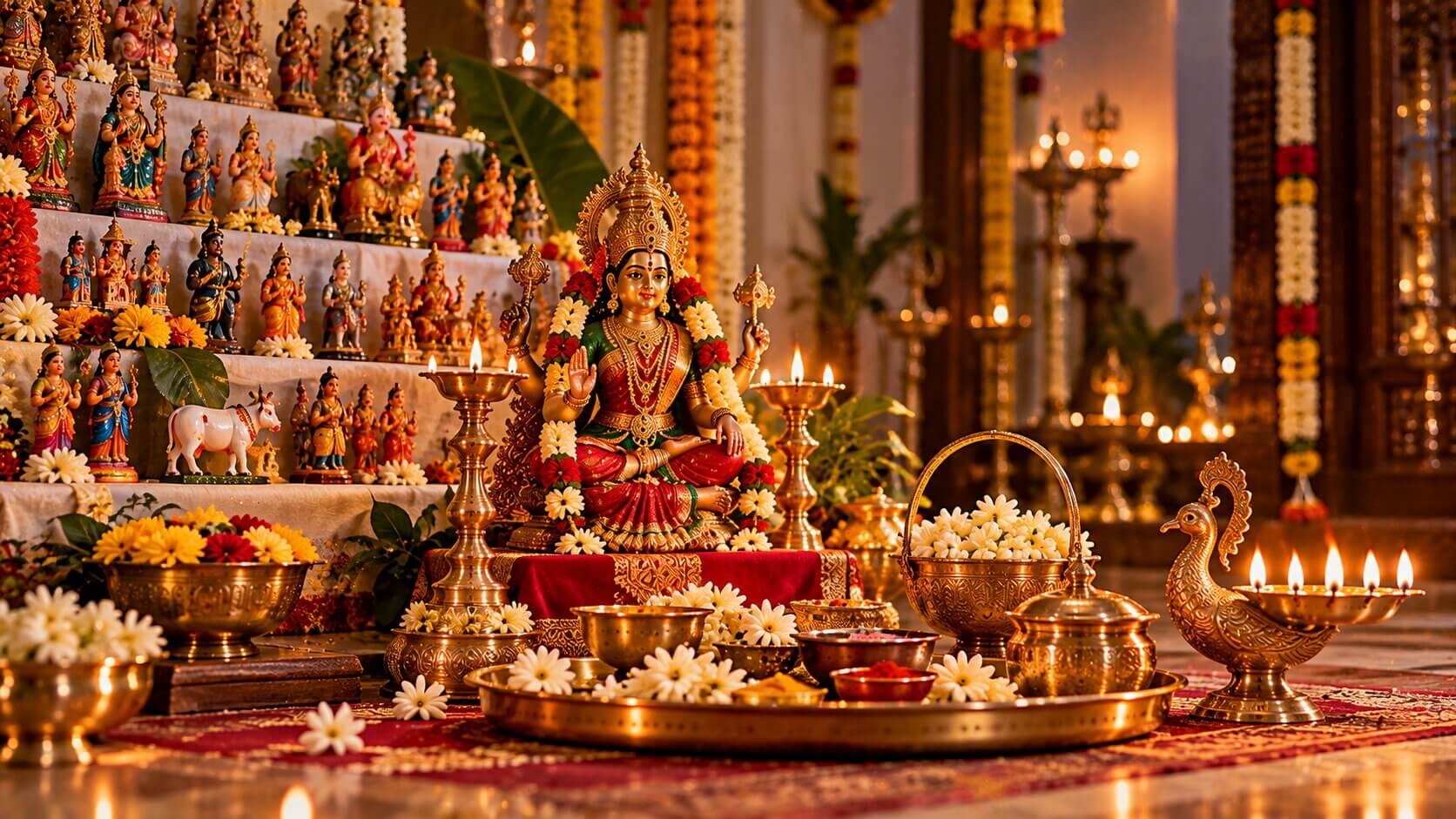
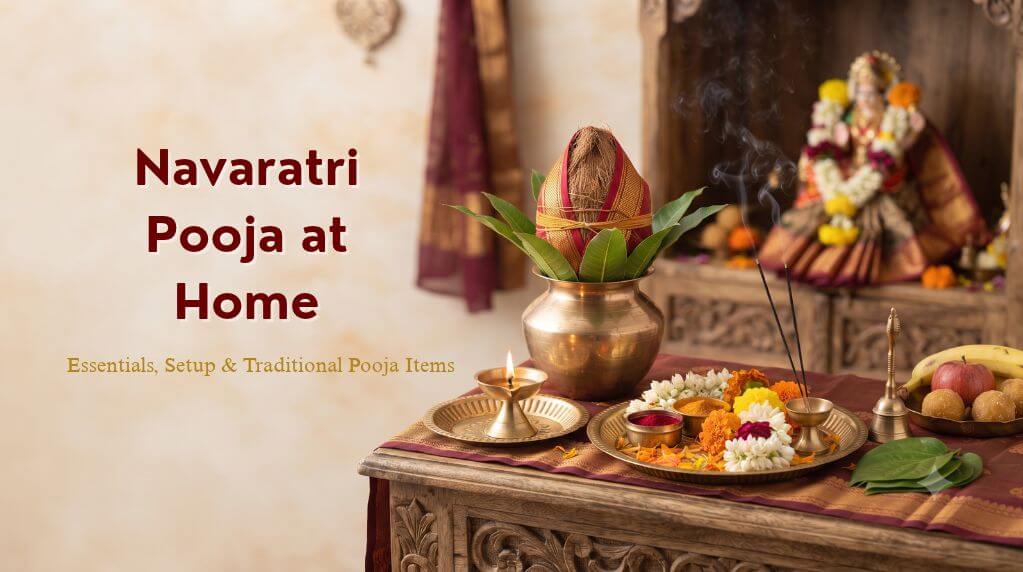
A practical basic set includes a Lakshmi brass idol or image, a clean cloth, flowers, kumkum, a water vessel, a stable diya with wick and oil or ghee, fruit or sweets, and a plate for offerings. Bengali households may add alpana materials, a Lakshmi sara, a ghot or kalash, grains, coconut, special leaves and ingredients for bhog. Elaborate decoration is optional.
A family should not feel compelled to buy every item named across regional guides, because those lists describe different traditions. Start with the worship followed in your own region and add only items with a clear devotional purpose.
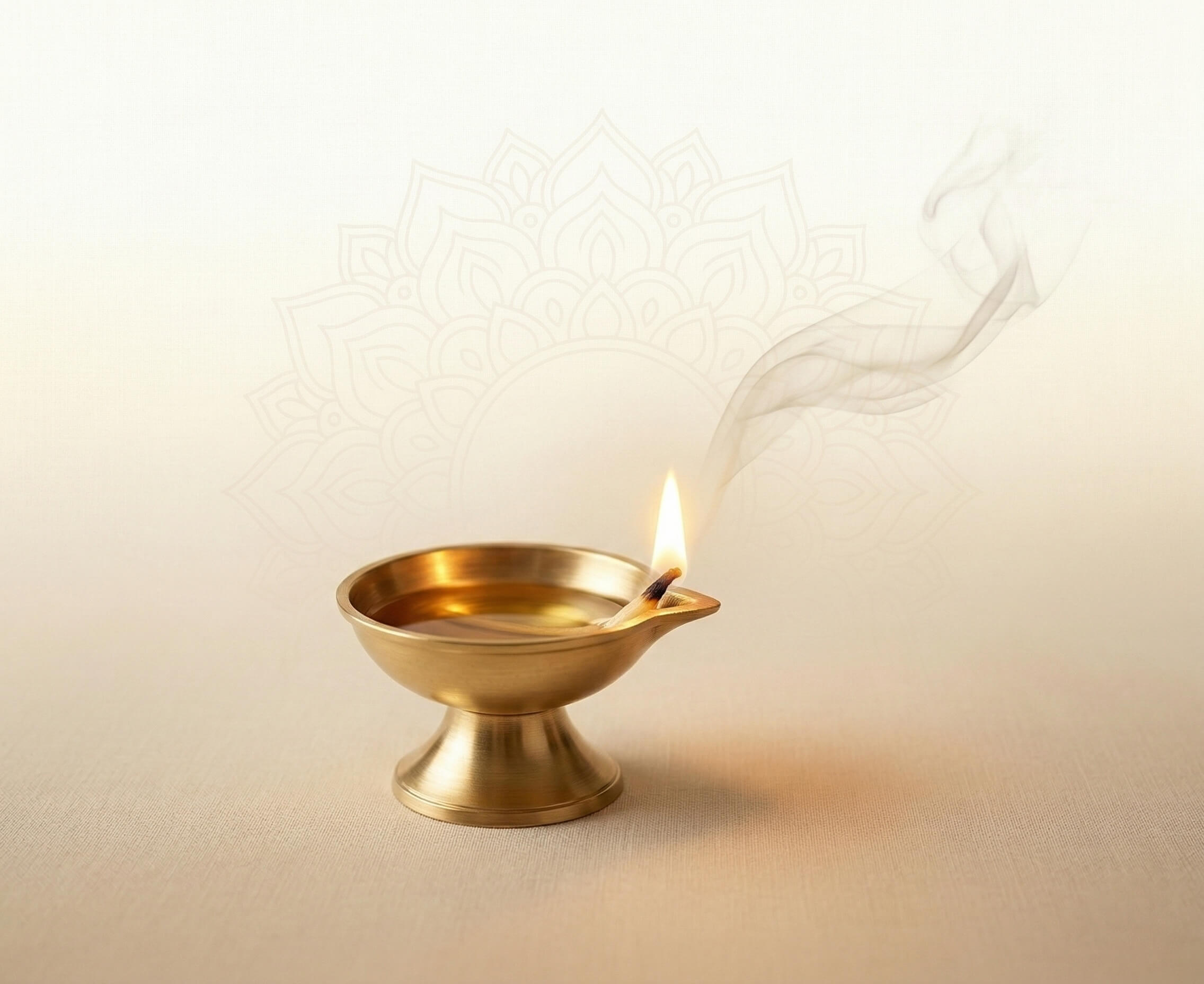
A Lakshmi idol, a brass diya, Lakshmi coins used devotionally and a pooja thali can create an orderly setup. These are reusable ritual articles, not guarantees of prosperity, and no object attracts wealth by itself. Place lamps on stable, non-flammable surfaces and away from fabric. A Lakshmi idol or lamp can be reused for daily worship rather than bought for one night only.
Bhog and kheer: avoid one rigid menu
Offerings vary by household and region. Khichuri, coconut naru and sweets are familiar in many Bengali Kojagari celebrations. Kheer and other milk preparations are widely associated with Sharad Purnima, especially outside Bengal. Some homes offer seasonal fruit or a simple cooked dish. Ask whether your household has restrictions on grains, onion or garlic before choosing a recipe. Kheer is a well-known tradition, but Lakshmi worship is not invalid without it.
The moonlight kheer custom, and what it does not prove
Many families place kheer under moonlight before sharing it as prasadam. The full moon is celebrated in poetry and devotional storytelling as especially luminous, and traditional accounts speak of nectar-like moonlight and blessings. This is a statement of religious belief and a cultural practice, not a medical finding. Moonlight does not sterilise food, cure illness or change nutritional value.
Milk-based desserts are perishable and can spoil at room temperature, particularly in warm and humid weather. If you follow the custom:
- Cook the milk and rice thoroughly and use a clean, covered container.
- Keep it away from insects and dust.
- Limit time outdoors, since a brief symbolic offering under the moon is preferable to overnight exposure.
- Refrigerate promptly, or prepare a fresh portion for sharing.
If your household prefers not to place food outdoors, you can honour Lakshmi with freshly prepared prasadam in the usual way.
Frequently asked questions
1. When is Kojagara Pooja in 2026?
The widely used Kojagara night is Sunday, 25 October 2026, with Purnima continuing into 26 October. Some Bengali panjikas may label the observance differently, and timings depend on your city.
2. Is Kojagara the same as Diwali Lakshmi Pooja?
No. Both honour Lakshmi, but they fall on different lunar occasions and have different ritual contexts.
3. Do I have to stay awake all night?
Jagaran, remaining awake for devotional worship or remembrance, is central to Kojagara. The extent and method vary by household and personal capacity.
4. Is kheer compulsory?
No. It is a well-known Sharad Purnima tradition, but Lakshmi worship does not become invalid without it.
5. Can I do a simple Lakshmi pooja without a priest?
Yes. A simple household prayer can be performed at home, following your family tradition for any formal steps.
6. Is moonlight kheer safe to eat?
Only if handled like any milk dessert. Keep it covered, limit time at room temperature and refrigerate promptly.
7. Which timings should I use if I live outside India?
Use a Panchang calculated for your own city, because both the civil date and the Nishita window can differ from India.
Related reading
Anugrah Aura offers reusable brass lamps and pooja essentials for families who choose them. A new purchase is not necessary for these observances.